
Natural Timber Variation and Choosing the Right Finish
A solid timber handrail is one of the most tactile elements of any staircase — it is the part of the design you touch every day. Every handrail we make is machined from solid timber, including the sweeps, curves, swan-necks and corner sections, which are cut from larger blocks of wood rather than moulded or extruded.
That is exactly what gives a handrail its quality and warmth. It also means that, once a finish is applied, the natural character of the wood becomes visible. In this journal entry we explain why solid timber handrails vary in appearance, how your choice of finish affects that, and what to expect from handrail joints — so you can choose a finish with confidence.
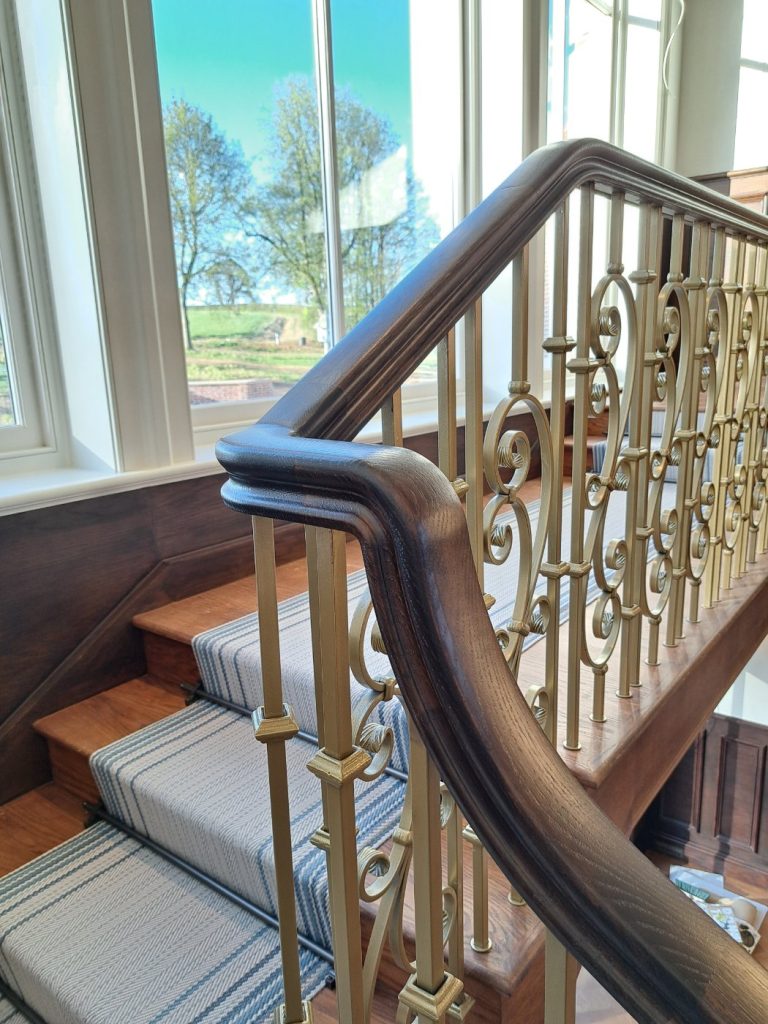
Why solid timber handrails vary in appearance
Because shaped sections such as sweeps and corners are cut across the grain in a different direction to a straight run of handrail, the way light and stain interact with the wood changes at these points.
Solid timber is a natural material, and no two lengths — or even two areas of the same length — are identical. Within a single piece of oak (or any hardwood) you will find:
- Variation in grain density between the softer “earlywood” and harder “latewood” bands, which absorb stain differently.
- Changes in grain direction where a curve, sweep or turn has been machined from a larger section or block.
- Natural colour and figure variation between individual boards, even when sourced from the same batch.
This is not a manufacturing fault. It is an inherent characteristic of working in solid wood, and the same variation is present in fine furniture, flooring and joinery throughout the industry.
How your choice of finish affects what you see
The finish you choose has the single biggest effect on how noticeable natural grain and colour variation will be. As a general rule, the lighter and thinner the finish, the more the timber’s natural character shows through — including its variation. The darker and more opaque the finish, the more it is concealed.
Clear lacquer
A clear lacquer allows the timber’s natural tone to show through with no added colour. Variation between sections is usually least noticeable here, as there is no stain to highlight the grain — though natural colour differences in the timber itself will still be visible. Lacquer will also make the grain more pronounced than on dry, sanded timber, giving a permanent “wet look”. You can preview this by wiping a sample of the handrail with a little alcohol, which shows the final finish before you commit.
Light stain
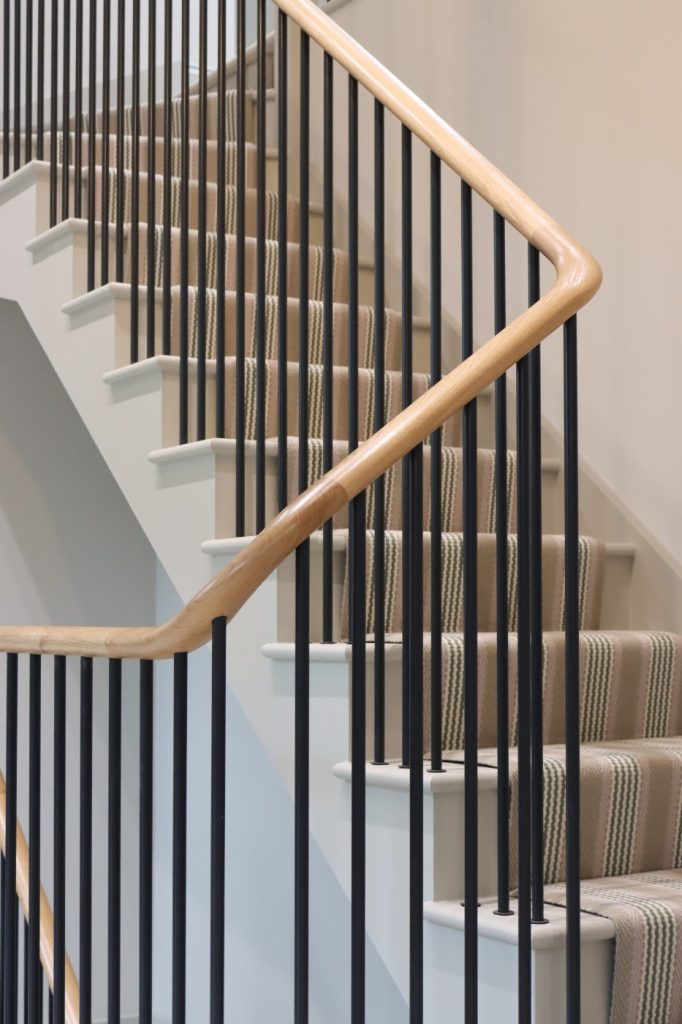
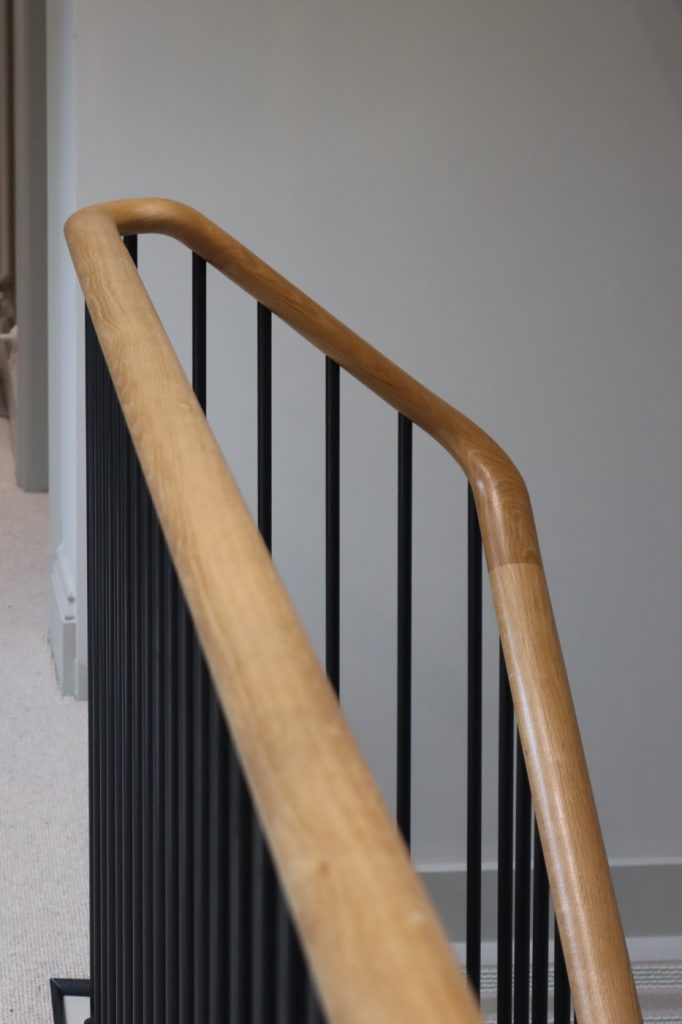
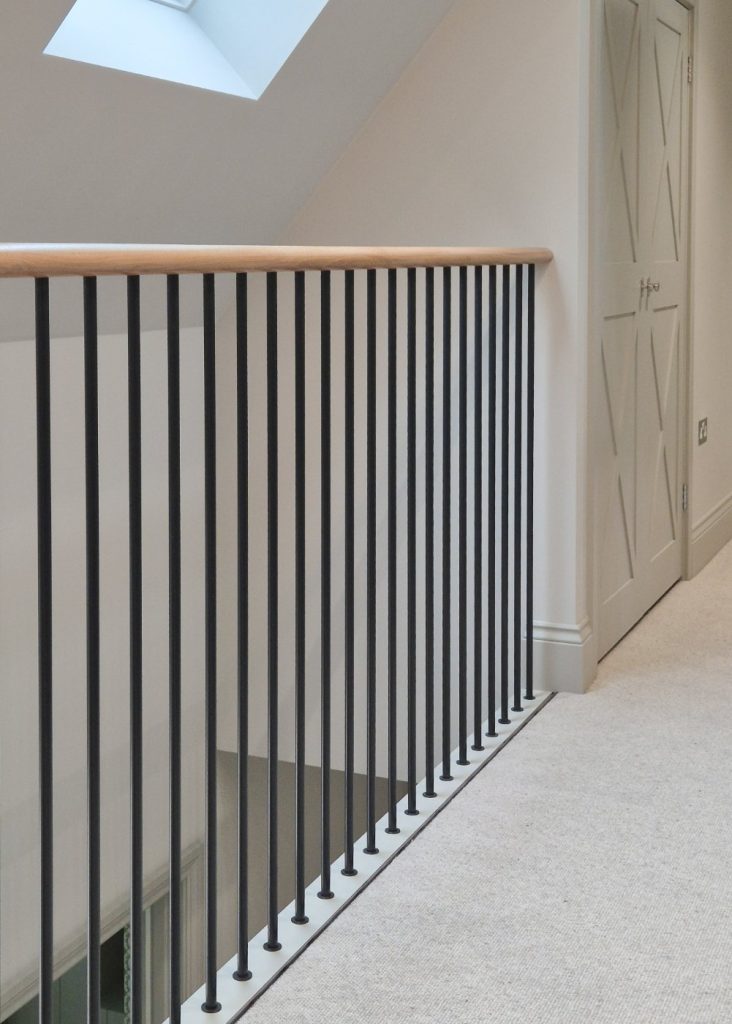
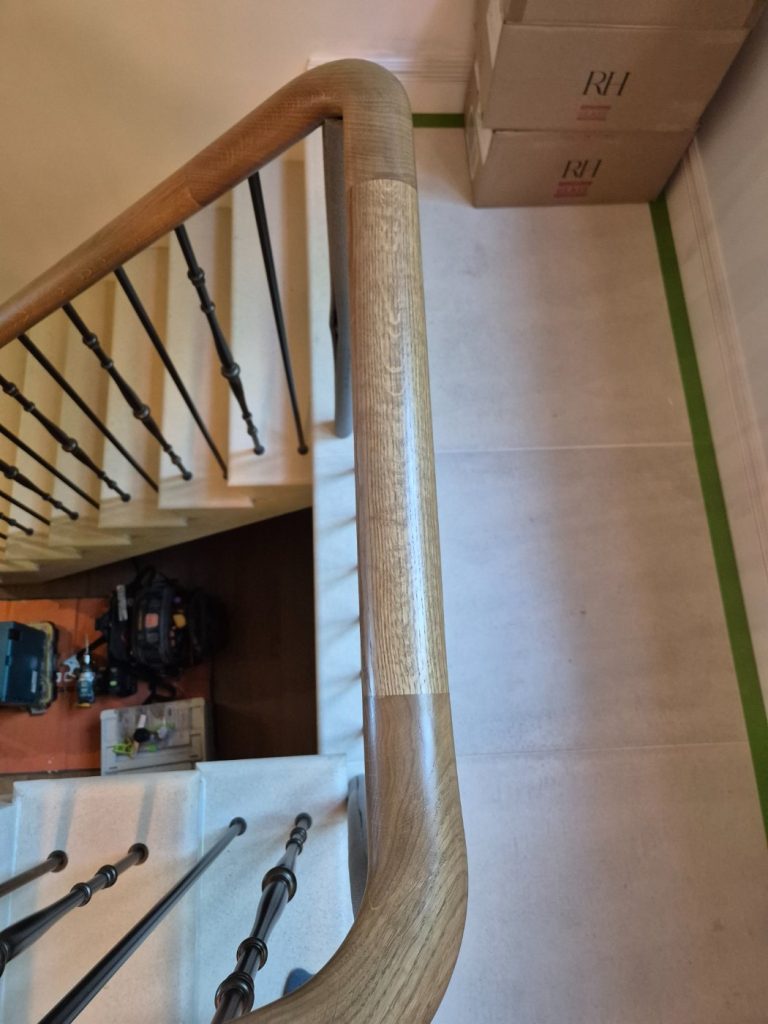
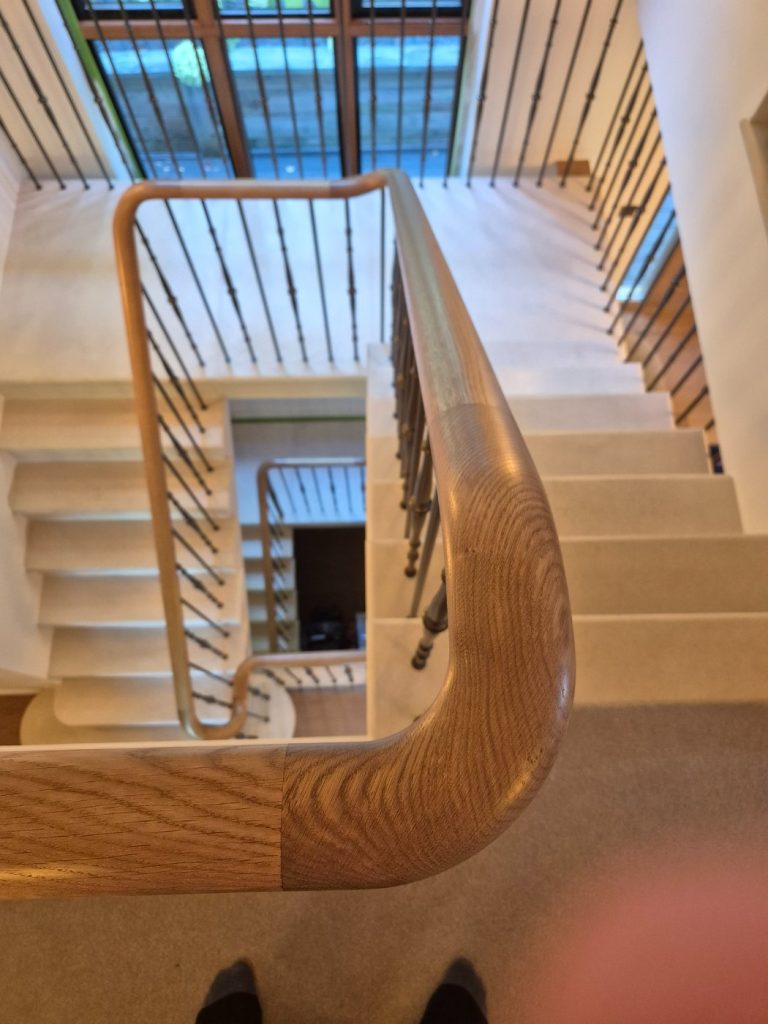
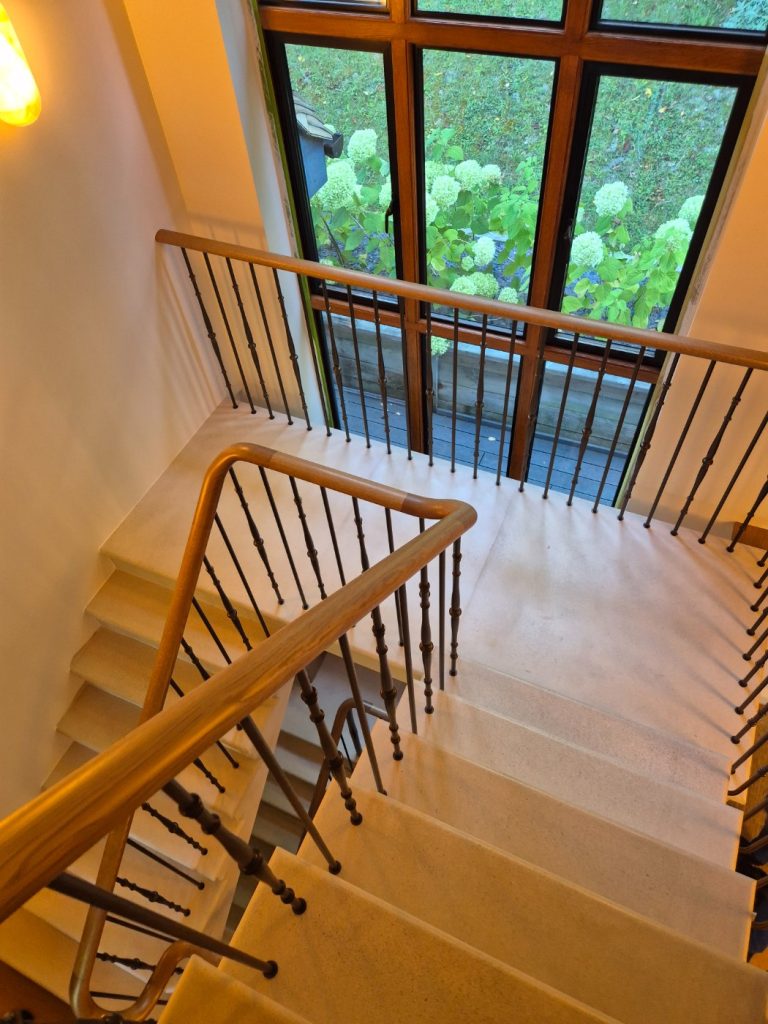
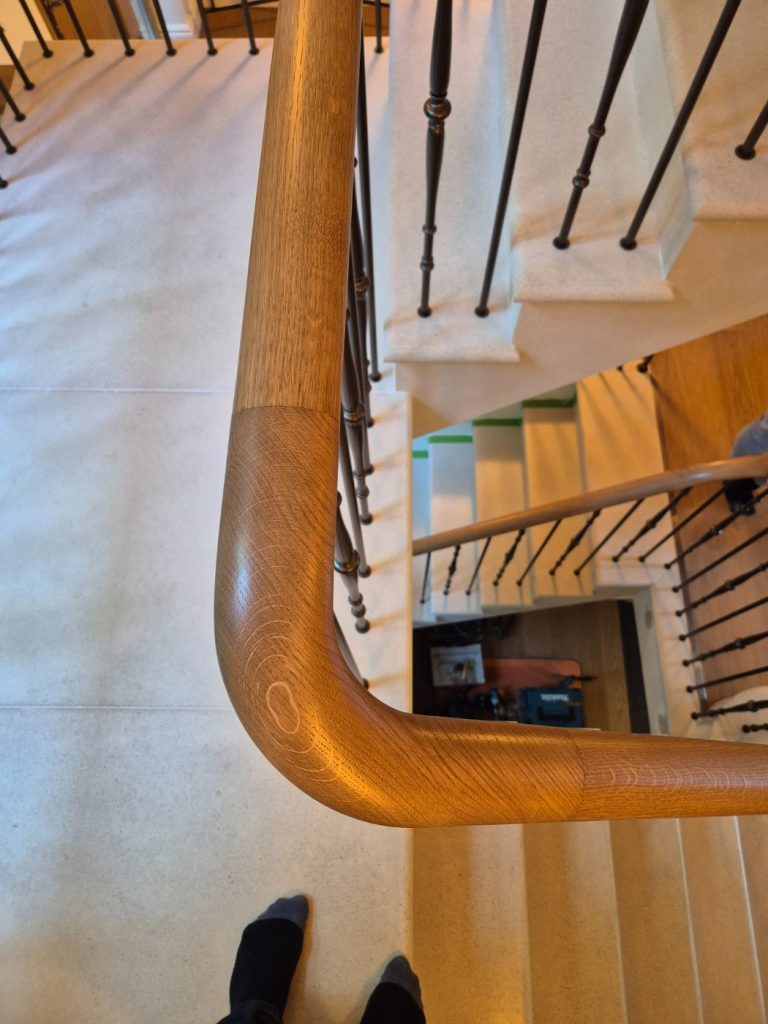
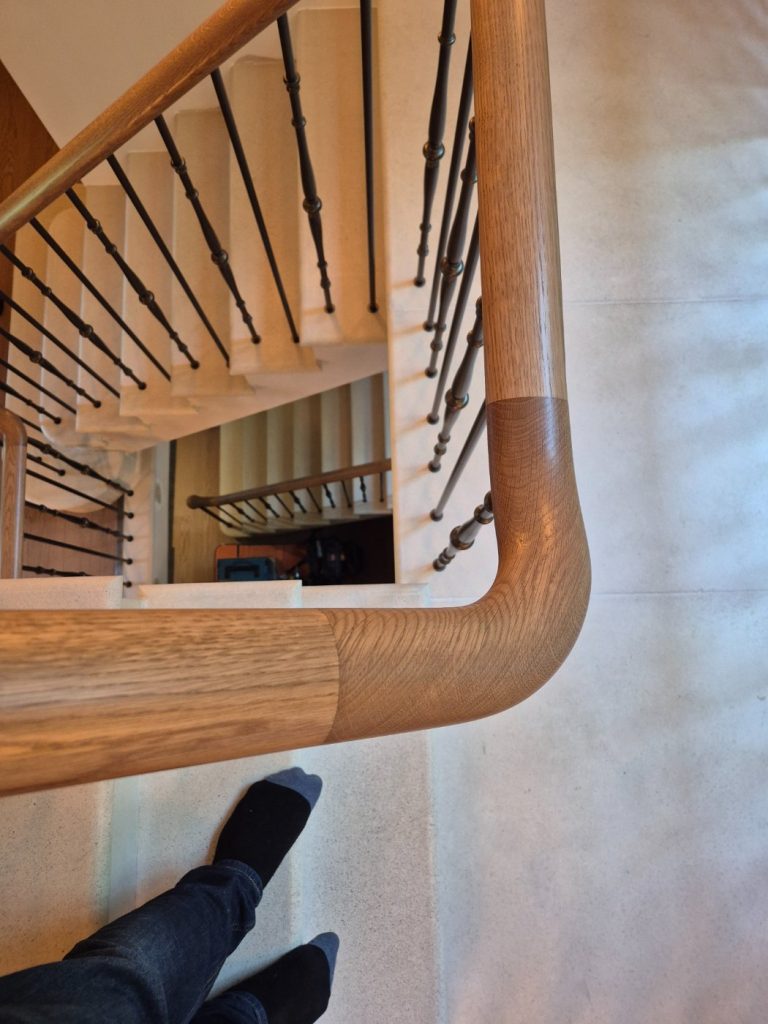
A light stain is the finish most likely to show variation clearly. Because the stain is thin, it is absorbed differently by the denser and less dense areas of grain, particularly where the grain direction changes at a sweep, corner or joint. This can make those transitions visually obvious. The handrails below are sound, flush and well made throughout — but natural grain and colour variation is clearly visible, particularly at sweeps and joints.
Dark stain
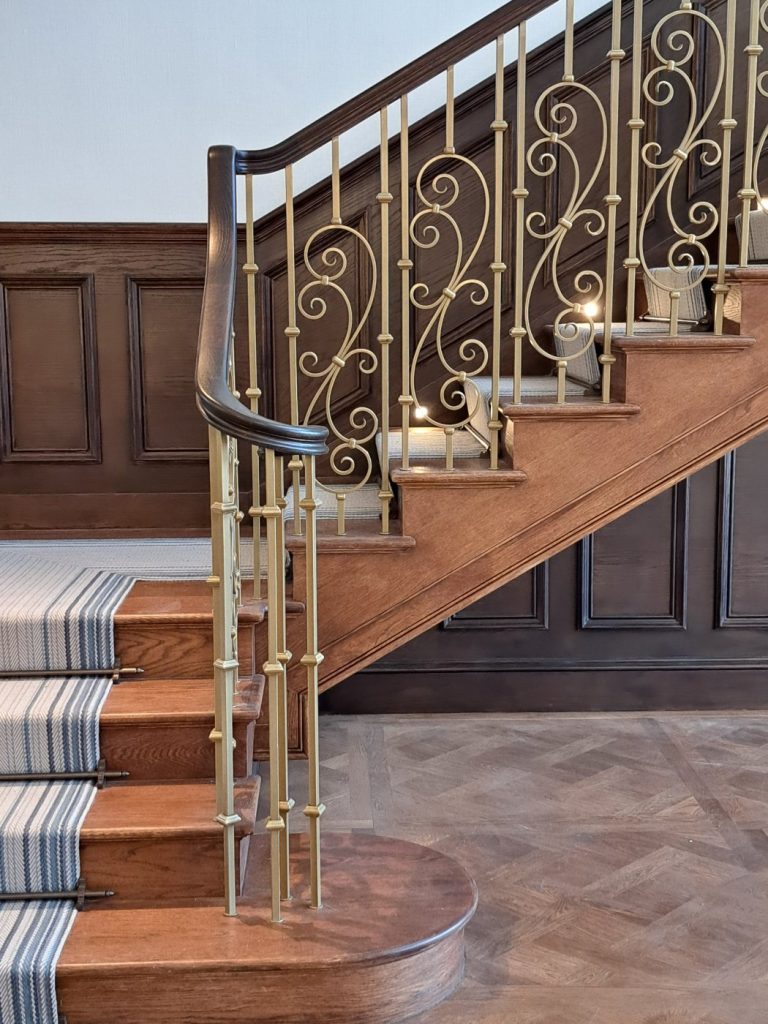
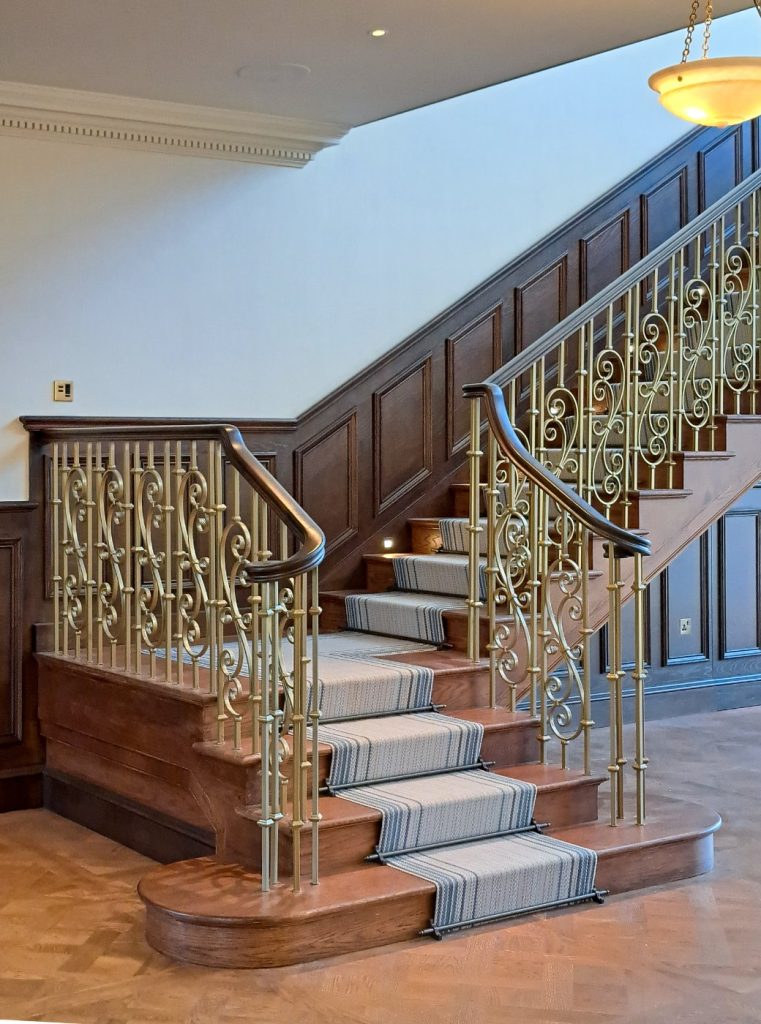
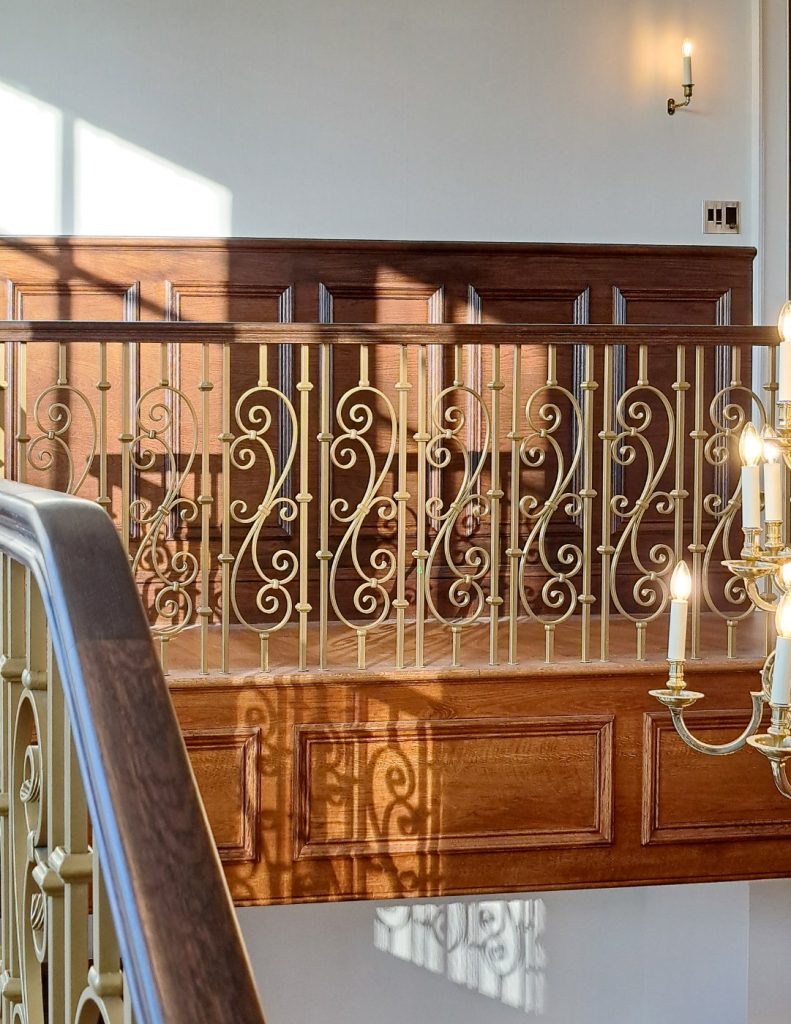
A darker stain is the most effective way to achieve a continuous, uniform appearance along the full length of a handrail, including through sweeps and joints. The depth of colour reduces the contrast between grain types, so transitions become far less visible.
Blended finish (“French polish” style)
Where a lighter overall tone is preferred, our finishers can blend the colour at joints and transitions, applying a touch more stain where sections meet to soften the change. This reduces — but does not eliminate — visible variation. Some natural light and dark patches, and some visibility at joins, should still be expected with this approach. As blending is carried out by hand at each joint, it is a slightly more costly process.
Our recommendation: where a client tells us they are not happy with the level of variation on a light-stained handrail, our recommendation is always to move to a darker stain, as this is the option most likely to achieve the continuous, even appearance most clients are picturing.
What to expect from handrail joints
Solid handrail is manufactured and installed in sections, jointed together on site or in the workshop. Our finishers work to achieve a flush, comfortable joint throughout. The industry standard is as follows:
- Acceptable: it is normal for a joint to be felt lightly under the hand as you run it along the rail. This is not a defect.
- A fault we will rectify: a joint is only considered a fault if it is proud, raised, or catches the hand.
Joints are also often the point where grain direction changes most — so on a light stain in particular, a joint may be more visible in colour even where it is perfectly flush and sound.
Choosing the right finish for your staircase
If you would like a natural, characterful look, a clear lacquer or light stain celebrates the timber as it is. If a seamless, continuous rail is the priority, a darker stain is the most reliable route. Our team is always happy to talk through finish options and provide samples before you commit — get in touch to discuss your project.